Archive
Playoff return highlights 2000s turnaround
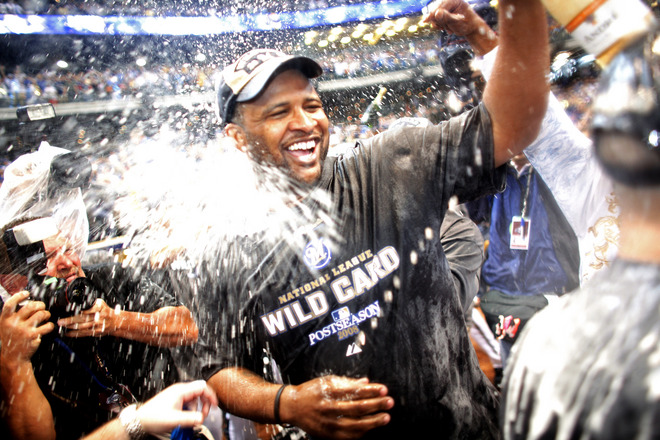
MILWAUKEE — Along with the turn of the century and the start of a new millennium, the 2000s marked a new era of Brewers baseball, one that included a playoff appearance.
It began in 2001 with the opening of Miller Park, the Brewers’ new state-of-the-art, $400 million home. The changes continued in 2002, when Doug Melvin was named general manager of the club. In 2004, the Brewers had new ownership, as Mark Attanasio took over the club from Commissioner Allan H. “Bud” Selig.
All that set the stage for the team’s return to the playoffs, 26 years after losing the 1982 World Series.
Brewers alumni Geoff Jenkins and Bob Wickman are scheduled to participate Friday in a pregame autograph session to celebrate the 2000s as part of the Brewers’ 40th Anniversary season. On Sunday, all fans will receive a collectible Brewers Bobble Head doll, featuring CC Sabathia securing the final out of the regular-season finale, playoff-clinching game in 2008, compliments of Palermo’s Pizza and Piggly Wiggly.
Inaugural Season
After a one-year delay due to a fatal crane accident, Miller Park finally opened its doors to the public on April 6, 2001. Among those in attendance were President George W. Bush and Selig, both of whom threw out ceremonial first pitches.
With his 435-foot home run in the bottom of the eighth, first baseman Richie Sexson sent the crowd of 42,024 home happy, as the Brewers secured the first win at Miller Park, 5-4, over the Cincinnati Reds.
The Brewers’ new ballpark got rave reviews, to say the least.
“There’s no comparison,” said former Brewers infielder Jim Gantner. “This is an awesome building and a great place to play. You miss County Stadium, but when you see this, you forget about it real quick.”
“I did play in County Stadium and know what it was like to play there,” Sexson said. “This is definitely 10 times better than County Stadium.”
While much of the credit for getting the ballpark built goes to Selig, and deservedly so, the Milwaukee native, along with his daughter, credited the fans on Opening Day 2001.
“There are many people that played a role in building this magnificent park,” Selig told the fans. “But none are greater than all of you.”
“You’re the best fans in the world,” added then-team president Wendy Selig-Prieb. “Enjoy this wonderful ballpark. You deserve it.”
In their first season playing at Miller Park, the Brewers had high hopes, but weren’t any better than previous seasons. In fact, they were worse, finishing 2001 in fourth place in the National League Central with a 68-94 record as injuries decimated the team in the second half.
One year later, the ballpark, with its unique fan-shaped roof, was host to the first 100-loss season in Brewers history, as the Crew finished 56-106, good for last in the division. With that came more changes for the Brewers, this time in the front office.
Melvin gets a second chance
In April 2002, the Brewers fired manager Davey Lopes after just 15 games as Milwaukee skidded out to a 3-12 record in Lopes’ third season at the helm. Five months later, general manager Dean Taylor was cut loose as well, as the Brewers shook up their front office.
Doug Melvin was tabbed for the job, given a second chance to show what he could do running a Major League club. Melvin, the former Texas Rangers general manager who led that franchise to three division titles in four years during the 1990s, was named the eighth general manager in Brewers history on Sept. 25, 2002.
“I don’t believe in rebuilding plans,” Melvin said in a spirited press conference. “If there was a three-year plan, I would wait and buy a ticket in, what, 2005? I don’t believe in that, I want people to be a part of this process to get to where we want to go.
“We’ll enjoy it a lot more if we do it together.”
Melvin brought in former Jays general manager Gord Ash as his assistant GM and hired manager Ned Yost, who brought along with him a new coaching staff. But Melvin’s best move in his first days as general manager now appears to have been keeping amateur scouting director Jack Zduriencik in place.
Under Zduriencik, the Brewers put together some of the best Drafts in club history, restocking their system with top-level talent, and building one of the best cores of young players in the Major Leagues.
Among those draft during Zduriencik’s tenure are former first-round picks Ryan Braun and Prince Fielder, second baseman Rickie Weeks, former Brewers shortstop J.J. Hardy, right fielder Corey Hart, staff ace Yovani Gallardo, catcher Jonathan Lucroy and center fielder Lorenzo Cain.
As well as building from within, one of Melvin’s best moves as general manager came in 2008, when he traded highly rated prospects Matt LaPorta, Michael Brantley and Zach Jackson to the Indians for Sabathia, who would help carry the Brewers to the Wild Card.
New Ownership
Along with Melvin, Ash and Yost, the organization brought in another new face in 2004, as Mark Attanasio, a Los Angeles investment banker and New York native, took over the club from the previous ownership group, which included Selig-Prieb.
When introduced at a news conference on Oct. 4, 2004, as the Brewers’ owner-elect, Attanasio said he was “up to the challenge” of turning around the ballclub. He also admitted he had dreamed as a child of owning a Major League baseball club.
“As a kid, I lived, breathed and died with the Yankees forever,” Attanasio said. “Once I realized that I wasn’t going to be able to hit a curveball, I gave up dreams of playing Major League Baseball, and when I got a little older thought maybe one day I could own a team.”
One of Attanasio’s biggest impacts upon taking over as the team’s principal owner was a commitment to raising the payroll to make the Brewers more competitive, despite playing in the smallest market in baseball.
After the payroll dipped as low as $27.5 million in 2004, it was raised to $39.9 million in Attanasio’s first season as owner. A year later, the Brewers’ payroll was up to $57.6 million, and by Opening Day 2007, it reached $71 million. When the Brewers reached the playoffs in 2008, the payroll was up to $80.9 million, and in 2010, the Opening Day payroll was up to $90.4 million.
Even with the financial commitment of Attanasio’s ownership group, he acknowledged in his first news conference at Miller Park that he had a lot to do to match the legacy of the Selig family in Milwaukee.
“The Attanasio family feels it has big shoes to fill here,” Attanasio said. “But that being said, we know that we can be the stewards of baseball in Milwaukee for the next 35 years.”
With Melvin, Ash, Yost and Attanasio in place, the Brewers were just a few years away from ending their playoff drought.
The Wait Is Over
When the Brewers returned from St. Louis in 1982 having lost to the Cardinals in the World Series, no one could have guessed it would take 26 years for the club to return to the playoffs. After all, they were expected to be back the following season.
But time after time, the Brewers’ best ballclubs came up short in 1983, ’88, ’91 and ’92. Even in ’07, when the Brewers led the division for much of the season, they came up just two games behind the Chicago Cubs.
Finally, in 2008, it was the Brewers’ turn.
Milwaukee entered the 2008 campaign with high expectations after the ’07 season saw the Brewers post their first winning record since ’92. In an effort to bolster their playoff hopes, Melvin brought in Sabathia just before the All-Star break on July 7. Sabathia was so dominant over the final three months of the season for the Crew that he even garnered a few votes for the NL Cy Young Award.
In 17 starts for the Brewers in 2008, Sabathia went 11-2 with a 1.65 ERA, tossing seven complete games, including three shutouts. Aside from a near no-hitter against the Pirates in Pittsburgh, the most impressive of those seven complete games was Sabathia’s last.
On the final day of the regular season, Sabathia made his third consecutive start on three days’ rest and worked all nine innings in the most clutch pitching performance in Brewers history. In front of 45,299 fans, Sabathia threw 122 pitches, struck out seven, scattered four hits and allowed only one unearned run.
“It’s unbelievable what he has done for the guys on this team, this organization and this city,” left fielder Ryan Braun said. “He’s revived baseball in Milwaukee. He took whatever expectation we had and destroyed it.”
Braun played a pretty big role in the club’s run as well. On that night, Braun made the difference at the plate, as he blasted a tie-breaking, two-run home run with two outs in the eighth inning, which gave the Brewers the 3-1 win.
Just days earlier, Braun delivered a grand slam in the bottom of the 10th inning for a 5-1 Brewers win.
“It doesn’t get any better than that. It’s difficult to describe,” Braun said. “The grand slam the other night, that was pretty special, but this one was pretty meaningful.”
With the Brewers finally returning to the postseason, Miller Park hosted the first two playoff games in its history on Oct. 4-5, 2008. The first game, Game 3, was the Brewers’ first win in the postseason since that 1982 World Series. Game 4 was a different story, however, as the Phillies secured a trip to the NLCS with a 6-2 win.
They came up short of winning their first playoff series since 1982, but for fans in Milwaukee and across the state of Wisconsin, the ’08 season was one to remember, and one 26 years in the making.
For the first time since 1982, the Brewers played games in October that mattered.
Jordan Schelling is an associate reporter for MLB.com. This story was not subject to the approval of Major League Baseball or its clubs.
Dodgers earn first sweep since June
MILWAUKEE — No Manny? No problem for the Dodgers.
With Manny Ramirez rumored to be the subject of trade discusions, the Dodgers showed Thursday they could put up plenty of offense without him and shut down their opponents’ bats as the 12-time All-Star took a scheduled off-day for the day game after a night game.
With a 7-1 victory Thursday over the Brewers at Miller Park, the Dodgers completed the sweep, giving them three straight wins for the first time since Aug. 7-10, when the Dodgers won their last two against the Nationals and the series opener in Philadelphia.
The sweep is the Dodgers’ first since they took all three games from the Giants in San Francisco on June 28-30.
“We haven’t done this for a while,” said Dodgers manager Joe Torre. “We certainly need more than this, but you can’t go win five in a row unless you win three in a row. I thought we played these three games very well and we had some key outs that we got out of the bullpen and some key two-out hits. We did a lot of things well this week.
“Hopefully we can build on this.”
While the six-run margin of victory looks like an easy win in the box score, the way the Dodgers got there was anything but. After taking a 1-0 lead in the first and letting the Brewers tie it back up in the fourth on a Prince Fielder home run, things got interesting in the middle innings.
With a 2-1 lead in the bottom of the fifth, Torre used three pitchers for three outs for a second consecutive game. Starter Carlos Monasterios seemed to lose his command in the inning, walking Brewers starter Yovani Gallardo and hitting Rickie Weeks and Corey Hart.
“I don’t think I lost that much control,” Monasterios said through an interpreter. “But since I hit that hitter, I lost a little bit of rhythm and that’s what happened.”
Torre, who said he thought Monasterios tried to rush through the fifth inning to put himself in line for the win, brought in Ronald Belisario with the bases loaded. Belisario (2-1) retired Ryan Braun for the third straight game, needing just four pitches — all fastballs — to strike out Braun and earn his second win of the season.
George Sherrill then entered to face Fielder, who grounded into a forceout to get the Dodgers out of the jam.
With Belisario matching up against Braun and Sherrill against Fielder, the fifth inning resembled the ninth inning of Wednesday night’s 5-4 win, when Torre used Belisario, Sherrill and Octavio Dotel to close out the game.
“That’s why they’re a good team,” Fielder said. “It’s a good move, bringing tough guys out of the bullpen to kind of shut it down.”
The move did appear to shut the Brewers down. Over the final four innings, the Dodgers’ bullpen allowed just one baserunner — catcher Jonathan Lucroy walked to lead off the seventh. For the game, the Dodgers gave up just two hits, which matched a Milwaukee season.
Reliever Kenley Jansen had a lot to do with that, as he was impressive over the sixth and seventh innings, retiring six of seven batters faced. He did not allow a hit while striking out four batters and walking one.
In the bottom of the sixth inning, Andre Ethier was called out on strikes to lead off the inning and was later ejected by home-plate umpire Adrian Johnson following a Matt Kemp strikeout.
“It was just a bad call, I thought it was a bad call,” Ethier said. “The pitch was repeated to the next batter, same exact pitch, I thought even a better pitch, and he called it a ball that time. So I was asking him from the dugout, ‘Are you sure about that?’
“He didn’t like it too much. Neither did I. One of us has the power to kick the other one out.”
Two batters later, Casey Blake blasted a two-run homer that gave the Dodgers some breathing room.
Finally, in the seventh, a walk followed by three straight singles and a fielding error by Lucroy resulted in three Dodgers runs, putting the game out of reach. Jansen got things started with a one out walk in his first career plate appearance and later scored his first career run on Ryan Theriot’s single.
“The seventh inning was not pretty,” Brewers manager Ken Macha said. “We didn’t back up home. We had a wild pitch. A ball got through Luc’s legs. That stuff happens from time to time, but you hope it would be at a minimum.”
When he wasn’t being asked about Ramirez this week, Torre talked a few times about the need for his players to ignore the standings, focus on themselves and string together a handful of wins as they look to get back in the playoff race.
After winning three in a row, the Dodgers cut their National League Wild Card deficit from eight games — following Sunday’s loss — to five games as of the end of Thursday’s win, with the Phillies having lost earlier and the Giants yet to play.
“We talked about winning series, and we didn’t do that for about a week and a half,” said catcher Brad Ausmus, who recorded his first three-hit game since July 27, 2008. “You’re talking about not only winning series, but mixing in a few series where you manage to sweep the team that you’re playing.
“We’re fortunate to come out of Milwaukee having done that.”
Jordan Schelling is an associate reporter for MLB.com. This story was not subject to the approval of Major League Baseball or its clubs.
Dodgers beat 8/26
Bullpen gives Torre matchup luxury
MILWAUKEE — When presented with his options for closing out the ninth inning in Wednesday’s 5-4 win over the Brewers, the most intriguing option for Dodgers manager Joe Torre came with the most risk.
Torre went with it anyway, matching up right-hander Ronald Belisario, lefty George Sherrill and right-hander Octavio Dotel with Brewers sluggers Ryan Braun, Prince Fielder and Casey McGehee.
“What really caused that, and why we had the idea to do it, was based on the fact that Prince Fielder was in the middle of it,” Torre said. “When you’re in a one-run game, you just have to figure out how to navigate your way through it.
With that plan, each of the three pitchers got their respective jobs done, retiring one batter. Dotel, in fact, needed just two pitches to get McGehee out for the save. It’s a plan that worked well, but one that could have spelled disaster for the Dodgers.
If any one of the three were unable to complete their assigned task, the Dodgers could have been headed for extra innings with a thin bullpen. The plan beyond McGehee, Torre said, was to keep Dotel in the game. If it had not been for Fielder batting between Braun and McGehee, the inning would have been Dotel’s with the Brewers’ right-handed heavy lineup.
“It worked out for us,” Torre said. “We just felt we needed to do that based on the fact that you can’t ignore what Fielder is capable of doing.”
The decision may have been easier for Torre considering the pedigree of the pitchers in his bullpen. As pointed out by Brewers manager Ken Macha after Wednesday’s game, nearly every guy in the Dodgers’ bullpen has closing experience.
Lefty Hong-Chih Kuo closed Tuesday’s series-opening victory. Jonathan Broxton, who pitched a clean eighth inning on Wednesday, had been the Dodgers’ closer until recently. Sherrill closed games in Baltimore before coming to Los Angeles. Dotel, in his 12th Major League season, has closed games for a number of other teams, including the Astros, Athletics and Pirates.
“We have nice pieces down there at the end of the game, there’s no question,” Torre said. “We get a [close game] situation in the last couple innings, we’ve got a lot of choices, especially now with George, you’ve got a left-handed choice aside from Kuo.
“Hopefully we’re in a position in a lot of games to have that mean something.”
Broxton impresses in eighth-inning role
MILWAUKEE — With the Dodgers’ current situation, manager Joe Torre is more concerned with winning games than assigning specific roles to his relief pitchers.
That being the case, he admitted there was a chance for Jonathan Broxton to find himself with a ninth-inning save opportunity in the near future. But that doesn’t mean he’s ready to change whom he calls his closer.
“I wouldn’t be afraid, after what I saw tonight, to put him out there,” Torre said after Wednesday’s game. “[Hong-Chih] Kuo is still our guy in that situation. But if Prince [Fielder] is coming up the inning before, you’re going to send Kuo out there against him.
“I think the situation will dictate it, but I was very comfortable watching Brox. After the 3-0, once he started throwing strikes, I thought he was very consistent with it.”
Broxton impressed in the eighth, retiring three straight batters with 13 total pitches. After opening the count 3-0 against pinch-hitter Chris Dickerson, nine of Broxton’s final 10 pitches were strikes as he got Dickerson to ground out, Rickie Weeks to fly out and struck out Corey Hart swinging.
“That’s the Brox that we’ll send out there in the ninth inning, that guy we saw [Wednesday night],” Torre said. “That’s liable to be in the next couple of days because that certainly was a good one for him.”
Jordan Schelling is an associate reporter for MLB.com. This story was not subject to the approval of Major League Baseball or its clubs.
Clutch hits give Crew enough to get by Cubs
CHICAGO — A change in approach may have led to the reversal of fortunes for the Brewers over the first two games this week against the Cubs.
“Base hits up the middle,” said Brewers manager Ken Macha. “I think all the base hits were up the middle that we scored the four runs.
“It’s been nice the last couple nights.”
They didn’t have as many hits to show for it as the previous night, but the Brewers continued to swing hot bats in Tuesday’s 4-3 win against the Cubs at Wrigley Field which clinched the series victory.
Most importantly, the Crew delivered with runners in scoring position, going 3-for-7 in such situations. Milwaukee’s fourth and fifth hitters, Prince Fielder and Casey McGehee, combined to go 3-for-6 with three RBIs.
The biggest hit of the night, though, belonged to the Brewers’ starting pitcher.
With his hit in the fourth, lefty Chris Narveson put the Brewers up, 3-1, as he delivered a one-out single to center field that scored catcher Jonathan Lucroy from second base.
“That was huge,” Narveson said. “Helping yourself at the plate has always been a big competition here with the pitchers, and it’s proven helpful lately.”
Narveson (9-7) wasn’t as sharp as he might have liked, but like the Brewers’ offense, he came up big in big situations. The lefty went 5 2/3 innings, limiting the Cubs to just one run on six hits while walking one and recording six strikeouts.
Rather than score their runs in bunches as they did Monday with five runs in each of the fourth and fifth innings, the Brewers strung together hits to score one run in the first, third, fourth and seventh innings.
“We kind of scrapped for our runs tonight,” Macha said.
During the Brewers’ previous series in Houston, Macha expressed concern about the team’s hitting approach in back-to-back shutout losses. That prompted him to discuss the matter with hitting coach Dale Sveum.
Based on the early results, Milwaukee’s change in approach seems to have worked. Still, Sveum downplayed the idea of an up-the-middle-specific focus.
“It’s not that big a deal. You guys make way too much out of that,” he told a reporter. “It’s just taking what the pitcher gives you.”
McGehee agreed with Sveum, while noting the much-improved results of late.
“It’s not like we sat down and all decided, ‘We’re going to stay in the middle of the field,'” McGehee said. “But Dale and I talked in the cage about what pitches we’ve been swinging at. It’s something that I’ve been trying to take up to the plate with me, but I don’t know what the other guys have been thinking.
“I think we’ve had a really good approach against [the Cubs] so far this series. For whatever reason, we have been hitting balls the other way pretty consistently.”
While four runs on nine hits doesn’t exactly compare to the 18 runs on 26 hits Milwaukee posted Monday, the Brewers scored at least four runs in consecutive games for the first time since doing so in three straight in a sweep of the Nationals from July 23-25.
For the second straight night, Ryan Braun, Fielder and McGehee came up big for the Crew.
“Those guys are all great hitters,” said Cubs starter Thomas Diamond. “I’m not going to take anything away from those guys. They’re all big league hitters, they’ve got All-Stars. To me, a hitter is a hitter, and all the accolades they get, they deserve and I just need to find a way to get them out.”
In the first, Fielder and McGehee delivered back-to-back two-out singles, with McGehee’s scoring Braun and putting the Brewers on top early. Two innings later, Fielder’s one-out single scored Rickie Weeks from second, making it 2-1 in the Brewers’ favor.
Finally, in the seventh, McGehee drove a liner to center for a sacrifice fly, scoring Weeks from third for the eventual game-winning run. Had it not been for a spectacular catch by All-Star center fielder Marlon Byrd, McGehee may have broken the game open with a one-out, bases-loaded hit.
“[Byrd] goes and gets it just as well as anybody,” McGehee said. “He’s like a free safety out there. You have to work to get one away from him.”
Though the Brewers came out on top, Diamond was impressive.
Despite giving up seven hits in six innings, he struck out 10 batters, becoming the first Cubs pitcher to do so in his Major League debut since Mark Prior on May 22, 2002. Diamond (0-1) struck out three in the first — while also giving up a run on two hits and a walk — and added at least one strikeout in every inning but the fifth.
“I think he’s got a chance to be pretty good,” McGehee said. “He’s deceptive, he’s got a good split or changeup or whatever he wants to call it. He threw enough strikes to make you want to be aggressive, but he also was effectively wild at times.”
Jordan Schelling is an associate reporter for MLB.com. This story was not subject to the approval of Major League Baseball or its clubs.
Teammates applaud Hart’s extension
CHICAGO — As the Brewers signed right fielder Corey Hart to a three-year extension on Monday, they solidified the corner-outfield spots through at least the 2013 season.
Left fielder Ryan Braun, who’s signed through the 2015 season, was happy for Hart.
“It’s exciting, I’m excited for him. He’s had to overcome a lot,” Braun said. “I think it’s just a sign of his character and his perseverance. I think he’s a great teammate and he’s a great player. He’s a great person to have as one of your core guys to build around for the franchise.”
Drafted by Milwaukee in the 11th round of the 2000 First-Year Player Draft, the 28-year-old Hart is the longest-tenured player in the organization.
Right up there with Hart is left-handed starter Manny Parra, who was drafted in the 26th round in 2001. Having grown close to Hart over the years, Parra was happy to see the Brewers sign him long term.
“I think after people were doubting what he was able to do, it’s great,” Parra said. “Last year was a below-par year for what he’s capable of doing, and he’s proving that this year. For him to redeem himself like that is great.”
Hart’s teammates were especially happy for him considering those circumstances, as Hart struggled in 2009 and in Spring Training this season, eventually leading to his name being left of the All-Star ballot and out of the Opening Day starting lineup.
“Anything could have happened in Spring Training,” said Brewers manager Ken Macha, referring to the uncertainty surrounding Hart at the time. “Now he’s put himself in a position to get this contract.”
 A Schelling For Your Thoughts
You must be logged in to post a comment.